This article outlines essential best practices to help you improve SMS deliverability and avoid carrier restrictions. By following these guidelines, you can ensure your messages reach your audience reliably and stay compliant with carrier policies.
Error and Opt-out Rate Monitoring
We are focused on helping our customers deliver trusted communications, and on making sure that the carrier does not block or suspend the account permanently based on bad usage.
We monitor the delivery rate of the overall account and take proactive measures to keep the delivery rate in check:
Please refer to this article for the thresholds at which violation warning emails are sent based on error rate and opt-out rate, as well as the thresholds at which temporary messaging restrictions are automatically applied.
As soon as the account hits the temporary suspension, all upcoming outbound SMS will fail until 00:00 AM UTC.
What should we do when we get a violation email?
- Stop all your workflows, campaigns, triggers, and/or bulk actions to contacts who have not explicitly opted in to receive messages from the sub-account.
- Enable and customize the Opt-Out language and Sender ID message as per your use case so that all upcoming messages are not flagged.
- Discuss this with your client to ensure that no bulk communication, message blasts, or cold prospecting campaigns are sent in the near future before we receive your reply to the ticket.
What are error and opt-out rates, and a good threshold?
A high opt-out rate indicates that contacts receiving your messages have objected, generated complaints, or marked your SMS as spam. A good opt-out rate is typically in the range of 0–1%.
A high delivery error rate indicates that you are sending SMS to contacts that are no longer in service, are unreachable, or use a non-SMS-capable device such as a landline. This may also mean external carrier filters are refusing to deliver your SMS due to bad sending behavior in the past. A good error rate is typically in the range of 0–6%.
How do I get the sub-account suspension removed early?
The sub-account suspension will be lifted in 24 hours. However, if the sub-account is permanently suspended, please refer to the article Why is your account suspended to unsuspend the sub-account.
How to prevent future SMS suspension
The sub-account should be able to send SMS after 00:01 AM UTC the next day after you received the non-compliant email. Use the best practices below to reduce your error rate.
Include opt-out language (reply STOP / CANCEL to unsubscribe) in the first SMS sent to every new contact.
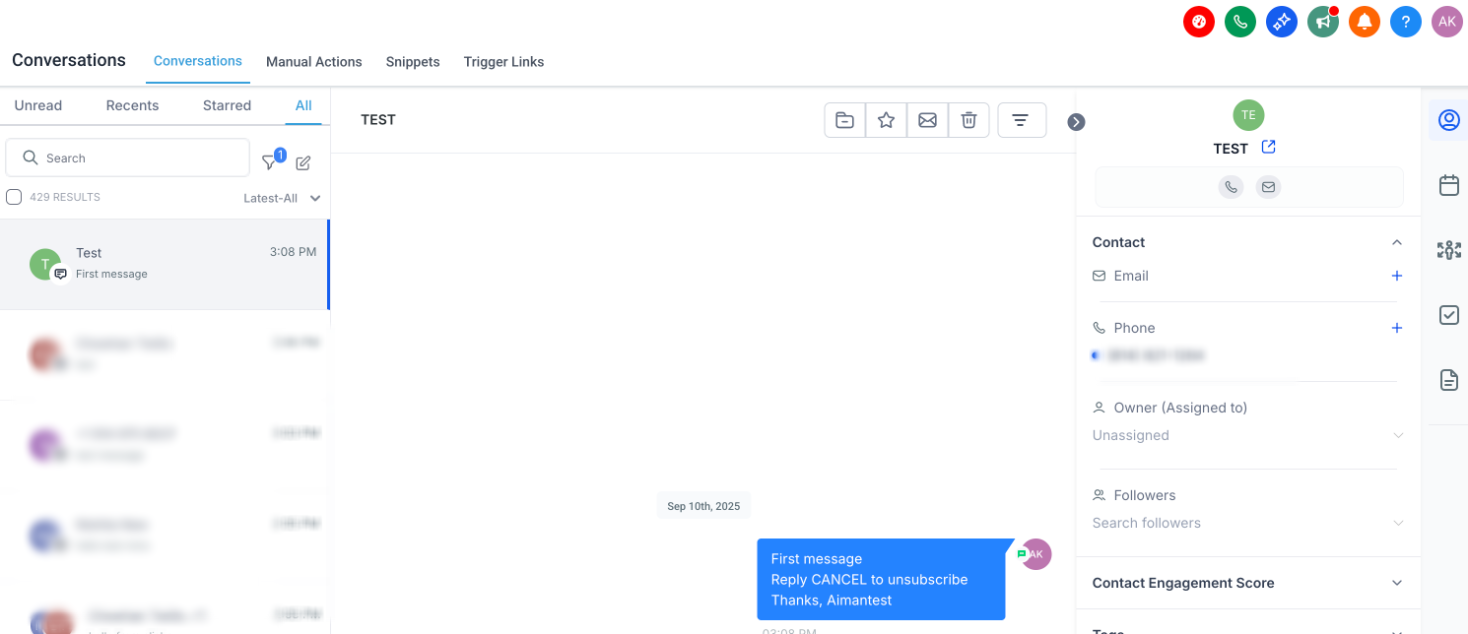
Include an introduction of yourself or your company in the first SMS sent to every new contact.
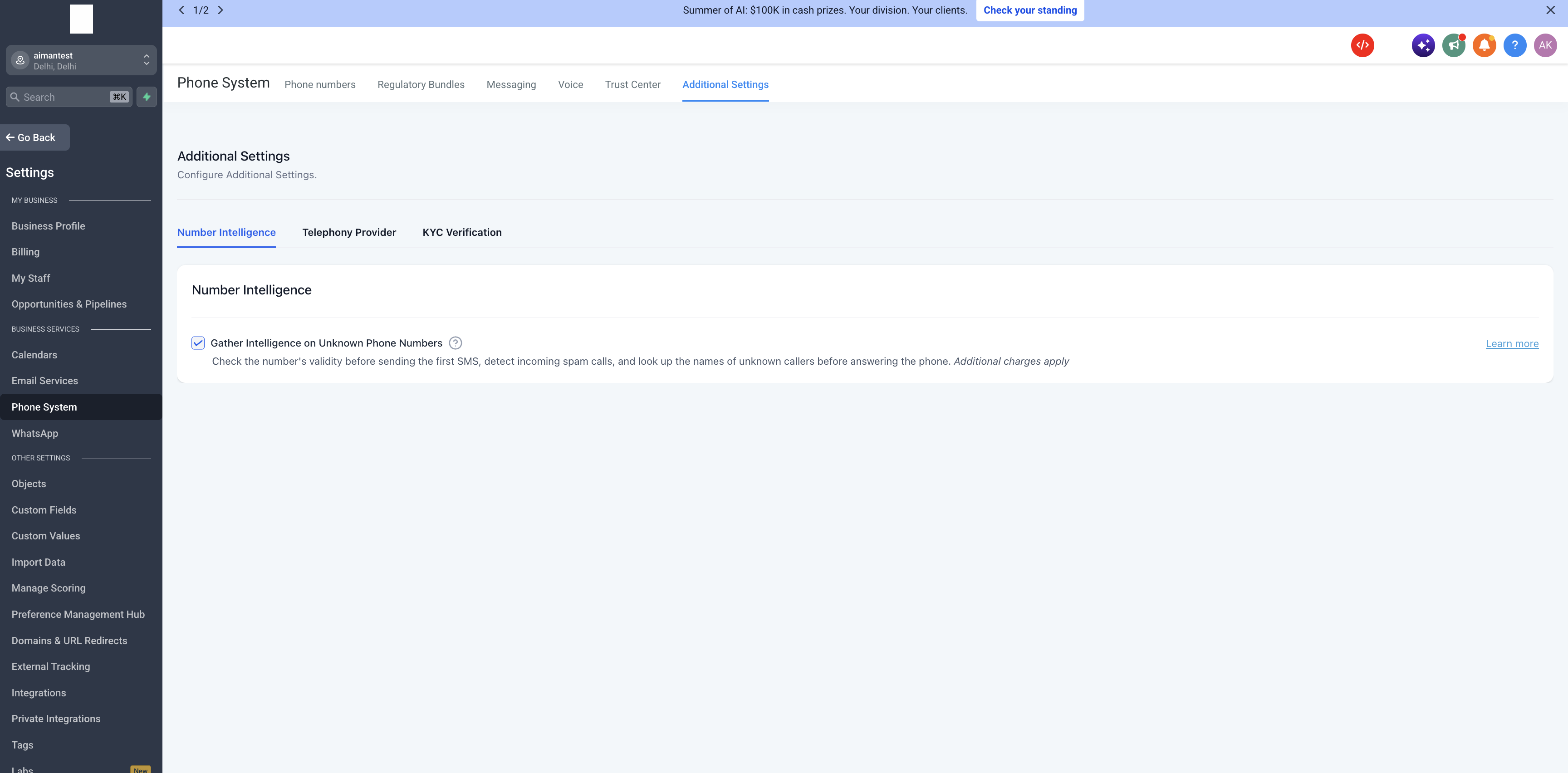
Avoid sending to landlines. Enable Number Intelligence — this feature looks up the number before sending and applies a temporary DND on the contact if it is not SMS-capable.
Using public URL shorteners like bit.ly or tinyurl.com can harm SMS deliverability. Carriers — especially T-Mobile and AT&T — flag these as high risk due to their association with spam and phishing.
T-Mobile prohibits URL cycling and multiple redirects. Messages using such tactics may be blocked.
AT&T outright blocks public shorteners.
- Use custom or branded short URLs linked to your business domain.
- Limit redirects to no more than one, and avoid cloaking link destinations.
- When possible, include the full URL to boost transparency (even if it takes extra characters).
Improving your URL practices can prevent filtering and ensure your messages reach their audience.
The messaging world is moving toward a state where, without these registrations, no messages will be delivered. You can view the Trust Center tab once the sub-account country is set to US.
If the country is not set to US, you can still use the system by following these best practices so the delivery rate stays high and the SMS is not flagged. A2P campaign registration is an enhanced safety net for delivery, but it doesn't mean you cannot use the system without it.
Campaign verification can take up to 1 week. If it is not approved after a week, please raise a support ticket so we can escalate the request to TCR.
For future web form opt-in setups, include a checkbox so the lead gives consent when filling out the form (if that's where your leads opt in).
Below are examples of the web form opt-in flow.
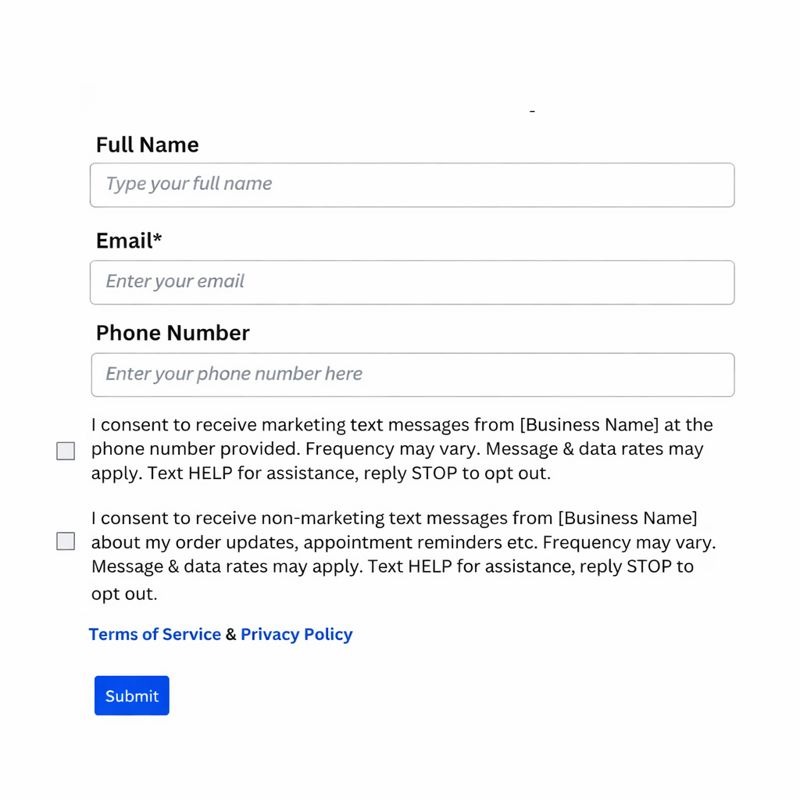
When the Phone Number field is Mandatory in the web form opt-in:
- Consent checkboxes should be separated for both Marketing and Non-Marketing messages.
- Consent checkboxes cannot be pre-selected and should be optional at all times.
- Privacy Policy and Terms & Conditions at the footer.
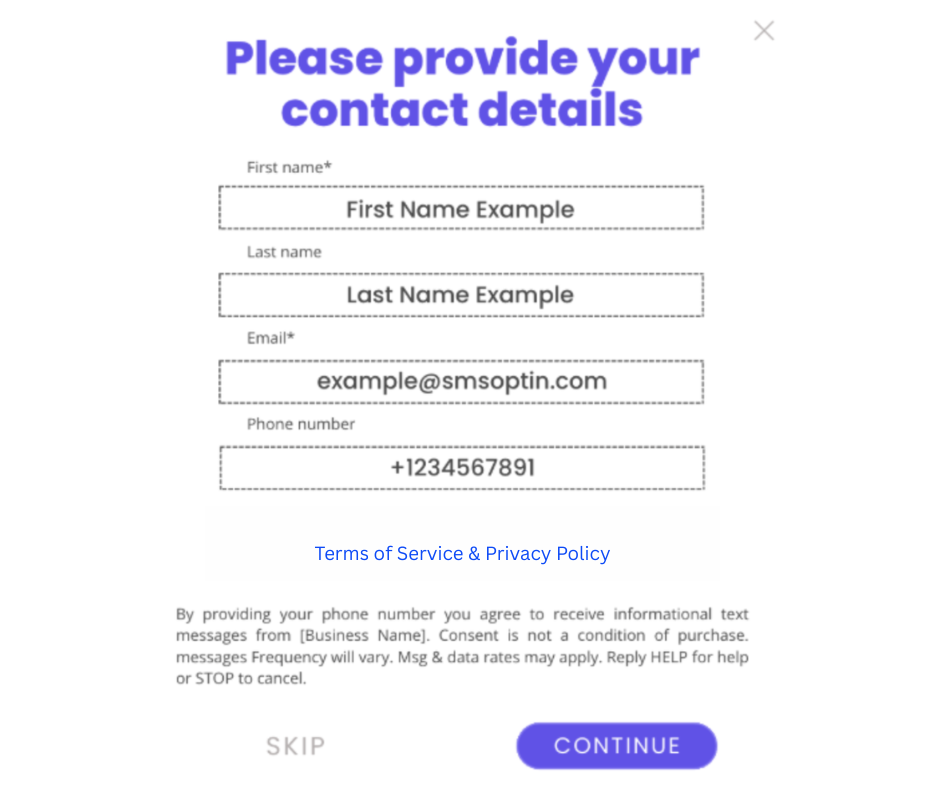
When the Phone Number field is not Mandatory in the web form opt-in:
- A consent checkbox is not required when the Phone Number field is not mandatory.
- Privacy Policy and Terms & Conditions at the footer.
The first message should state the source of how your leads opted in.

Add opt-in language so contacts are actively double opted-in via SMS and the web form checkbox (e.g., reply 1 to subscribe).
Also, review our Messaging Policy for further guidance.
Frequently Asked Questions
Was this article helpful?
That’s Great!
Thank you for your feedback
Sorry! We couldn't be helpful
Thank you for your feedback
Feedback sent
We appreciate your effort and will try to fix the article