Schema Markup Generator is a native tool in HighLevel’s Website & Funnel Builder that lets you create, validate, and publish schema markup (JSON-LD) for a page. This article explains what the feature is, why it matters, and how to add and manage schema on your Websites and Funnels.
Note: This feature is currently in Labs and needs to be enabled by Agency for Sub-accounts.TABLE OF CONTENTS
- What is Schema Markup Generator?
- Key Benefits of Schema Markup Generator
- How To Generate Schema Markup in HighLevel Funnels/Websites
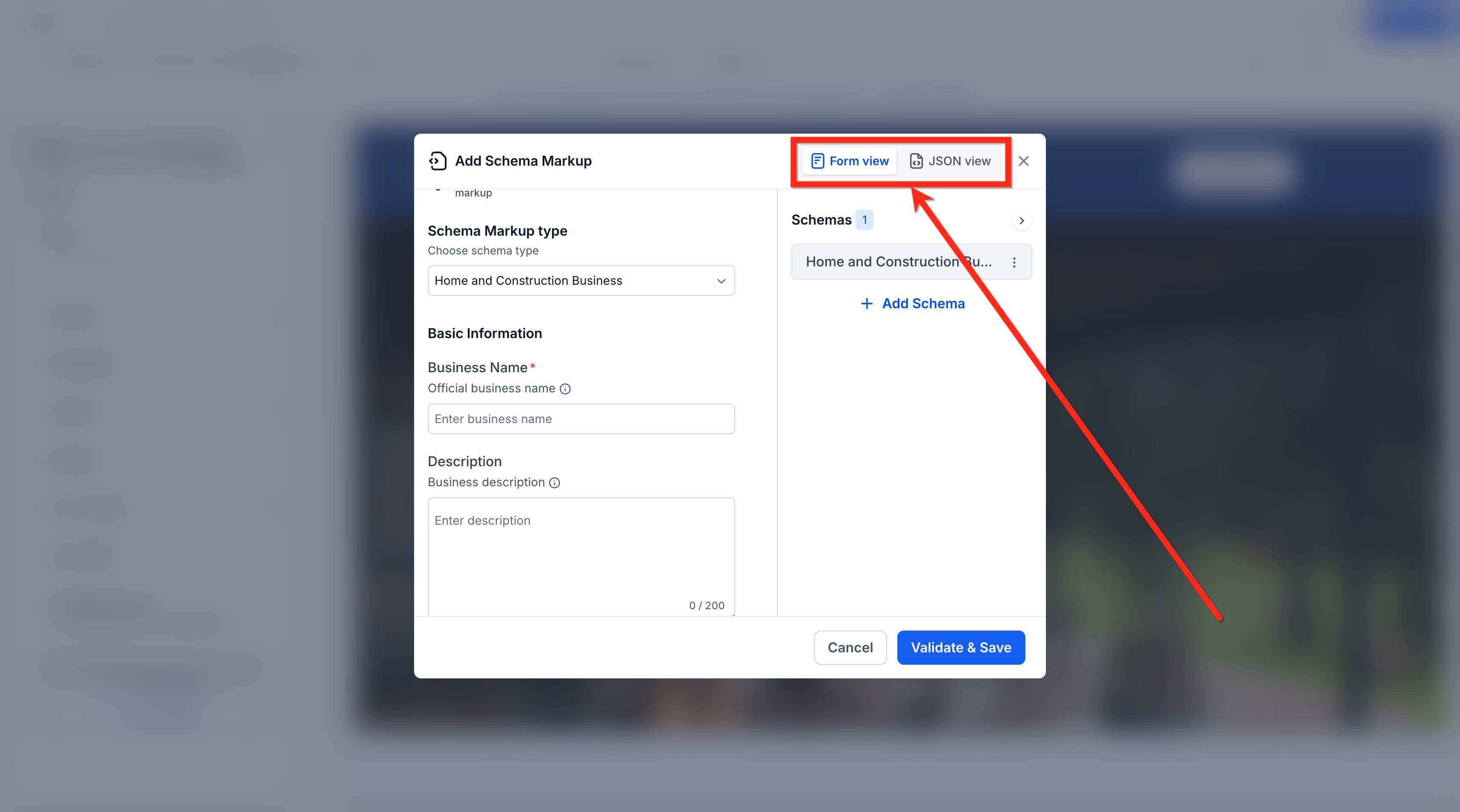
- Schema Views: Form View vs JSON View
- Supported Schema Types
- Best Practices for Success
- Most Useful Schema Types for Local Businesses
- Good to Know
- Frequently Asked Questions
- Related Articles
What is Schema Markup Generator?
Schema Markup Generator is a native tool in the HighLevel Website & Funnel Builder that allows you to create, validate, and publish schema markup (structured data) for individual pages. Structured data helps search engines and AI systems interpret key details like your business type, products, FAQs, articles, events, and more.
Key Benefits of Schema Markup Generator
140+ Schema Types: Covers common schema types such as LocalBusiness, Product, Article/BlogPosting, FAQPage, Event, Organization, and more.
Form View (No-code): Guided fields make it easy to complete schema details without technical knowledge.
JSON View (Advanced): Paste or write JSON-LD directly when you need full control.
Built-in Validation: Highlights issues when saving so you can fix schema problems before publishing.
One-Click Save & Publish Flow: Schema is saved to the page configuration and goes live when the page is published.
Multiple Schemas Per Page: Add and manage more than one schema type on the same page (for example, LocalBusiness + FAQPage).
How To Generate Schema Markup in HighLevel Funnels/Websites
Correct setup starts by opening the exact Website page or Funnel step you want to optimize and then adding schema that matches the content visitors can see. Because schema is page-specific, you’ll repeat these steps for each page or step where you want structured data.
Note: Schema is page-specific and does not carry over to other pages or funnel steps.Go to Sites.
Click Funnels or Websites (whichever you want to add schema to).

Create a new Funnel/Website, or edit an existing one.

Click Edit on the specific Website page or Funnel step you want to update.

In the left panel, open SEO & AI search optimization.
Click on Schema Markup.

Click + Add Schema.

Select a schema type from the dropdown (for example: LocalBusiness, FAQPage, Product, Article/BlogPosting).

Add your schema details using one of the following:
Form View: Fill out the guided fields.
JSON View: Paste or write your JSON-LD.

Add the necessary information as per your chosen category.
Click Validate & Save.

If validation fails, fix the highlighted fields or JSON formatting issues.
Save & Publish the Website page or Funnel Step to make the schema live.

Schema Views: Form View vs JSON View
Choosing the right editing view helps you work faster and reduce errors. Form View is ideal for most users, while JSON View is best when you need to paste schema from another source or customize advanced fields.
Form View:
Best for no-code setup
Uses guided fields to complete required and recommended properties
Helps avoid formatting mistakes
JSON View:
Best for advanced users and developers
Allows direct JSON-LD editing or pasting existing schema
Useful for adding specialized properties not shown in Form View
Supported Schema Types
Schema Markup Generator supports a wide range of schema types so you can match structured data to your page goals. Using the correct schema type improves clarity for search engines and AI systems and helps your page qualify for enhanced results where applicable.
Common supported types include:
Organization
Website
BreadcrumbList
Article / BlogPosting
FAQPage
QAPage
HowTo
VideoObject
Person
Product
LocalBusiness
Event
Note: This includes child types under each category (for example, LocalBusiness subtypes).
Best Practices for Success
- Accuracy is critical: Only mark up information that's visible on the page. Never add fake reviews or hidden content.
- Keep it current: Update schema when business hours, prices, or contact information changes.
- Use specific types: Choose "Dentist" instead of generic "Local Business" when possible—the more specific, the better.
- Combine multiple schemas: Your homepage can include both Organization and Local Business schema for comprehensive coverage.
- Add schema to all key pages: Homepage, contact page, product/service pages, and blog posts all benefit from appropriate schema markup.
Most Useful Schema Types for Local Businesses
- Local Business: Essential for any business with a physical location. Includes name, address, phone, hours, and service area.
- Product: For items you sell. Shows prices, availability, ratings, and images directly in search results.
- Service: For services you offer. Displays service descriptions, pricing, and service areas.
- Review: Customer testimonials that appear as star ratings in search results (must be real reviews).
- FAQ: Questions and answers that expand directly in Google search, capturing more screen space.
- Event: Workshops, sales, classes, or any scheduled occurrence. Shows dates and registration links.
Good to Know
Knowing how schema behaves in the editor helps you troubleshoot quickly and avoid surprises after publishing. These details are especially important when you’re updating pages often or working across multiple funnels.
Schema is page-specific and does not automatically carry over to other pages or funnel steps.
Schema can appear in the editor/preview after saving, but it becomes live only after the page is published.
Schema is not auto-generated when creating a new page with AI—add it manually after your content is finalized.
Keep schema updated when visible details change (for example: business hours, pricing, contact information).
Frequently Asked Questions
Q: Do I need technical knowledge to use Schema Markup Generator?
No. Form View is designed for no-code setup. Advanced users can use JSON View to paste or customize JSON-LD.
Q: Where does the schema get published on my page?
Schema is published as JSON-LD in the page’s when the page is published.
Q: Why do I see schema in preview but not on the live page?
Saving stores schema for the page, but it only goes live after you publish the page or funnel step.
Q: Can I add more than one schema type to a single page?
Yes. You can add and manage multiple schemas per page (for example, LocalBusiness + FAQPage).
Q: Can I paste schema from another tool or website?
Yes. Use JSON View to paste your JSON-LD, then Validate & Save to check for issues before publishing.
Q: What does “Validate & Save” check?
Validation helps identify missing or incorrect fields and formatting issues so you can correct problems before publishing.
Q: Should my schema match what’s visible on the page?
Yes. Only add structured data that reflects real content users can see to avoid misleading markup.
Related Articles
Was this article helpful?
That’s Great!
Thank you for your feedback
Sorry! We couldn't be helpful
Thank you for your feedback
Feedback sent
We appreciate your effort and will try to fix the article