Ad Manager Settings centralizes the connections, conversions, audiences, and subscription controls that power HighLevel Ad Manager. Use this page to connect Meta and Google, manage datasets/pixels, create offline conversion actions, and keep audiences in sync. This overview explains what each tab does and links to the in-depth setup guides.
What is Ad Manager Settings?
Ad Manager Settings is the configuration hub for your advertising infrastructure in HighLevel. It connects your Meta and Google assets, defines how conversions are tracked and sent, manages audience lists used in campaigns, and controls subscription access—so ads can report accurately and scale reliably across accounts.
Key Benefits of Ad Manager Settings
Understanding the “why” behind each tab helps teams avoid misconfiguration and data gaps. These benefits focus on cleaner tracking, faster troubleshooting, and safer account changes.
- Single Source of Truth: Manage Meta & Google connections, conversions, and audiences in one place.
- Stronger Conversion Tracking: Define Meta datasets/pixels and Google offline conversion actions for complete attribution.
- Operational Safety: Clear controls for adding/removing ad accounts and pages with notes about impact.
- Audience Growth: Create and sync custom or lookalike audiences for better targeting.
- Scalable Governance: Subscription visibility ensures the right sub-accounts have Ad Manager enabled.
Where to Find Ad Manager Settings
Quick navigation ensures teams always adjust the right settings at the sub-account level, reducing mistakes and rework.
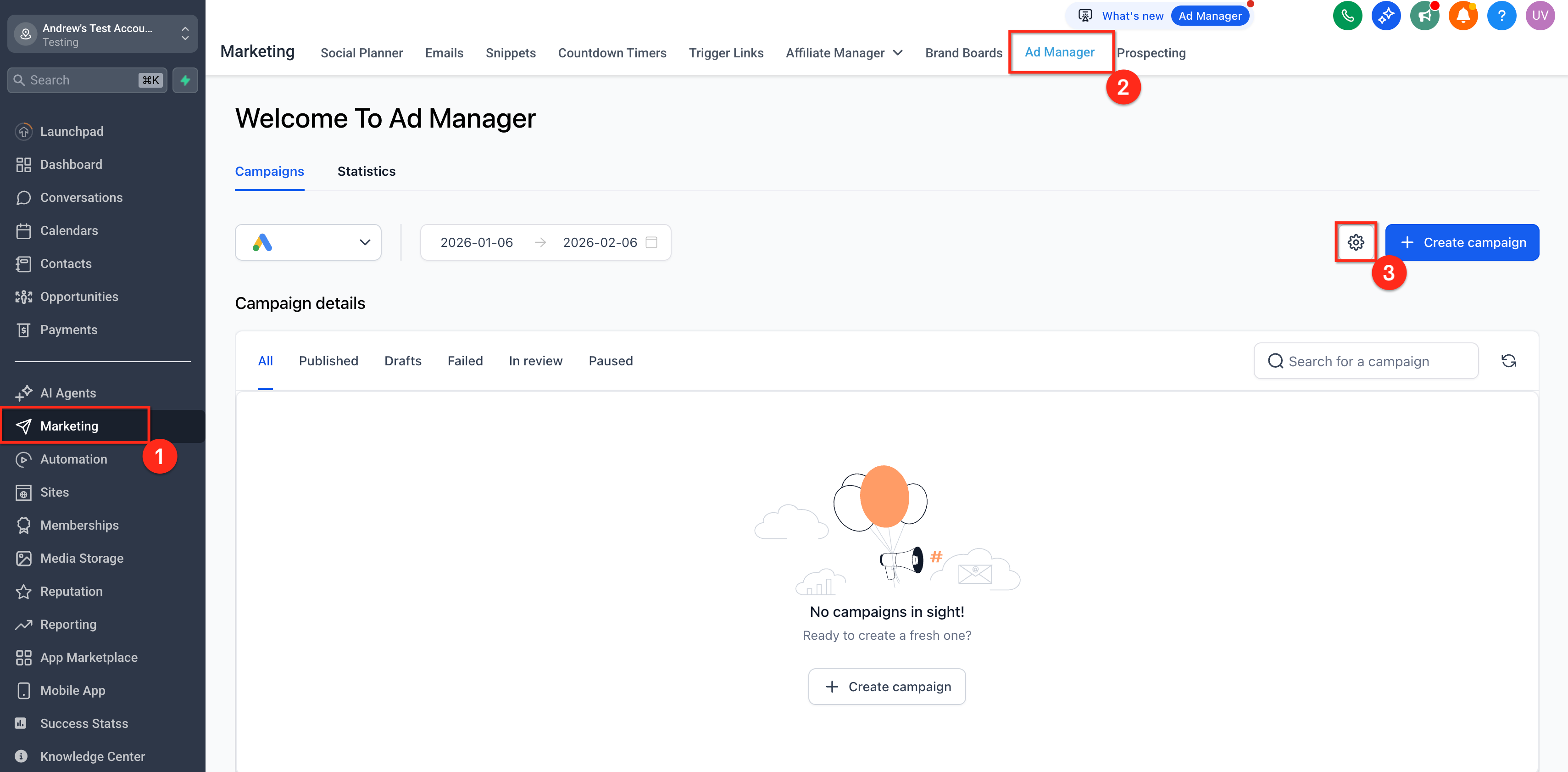
- Go to your sub-account.
- Open Ad Manager available in the Marketing option at the left pane.
- Click Settings.
How To Setup Ad Manager Settings
A clean setup sequence reduces troubleshooting later. Follow the order below so assets, conversions, and delivery actions are aligned before launching campaigns.
Step 1: Confirm Access & Plan.
In Subscription, verify Ad Manager is enabled for the sub-account.
Step 2: Platform Settings: Meta
Use the Meta area to connect ad accounts and pages, manage your dataset/pixel for web events and server events (CAPI), and verify that permissions are correct.
Ad Accounts
Ad account connections let Ad Manager read performance, build audiences, and attribute results. Maintain least-privilege access and avoid unnecessary deletions.
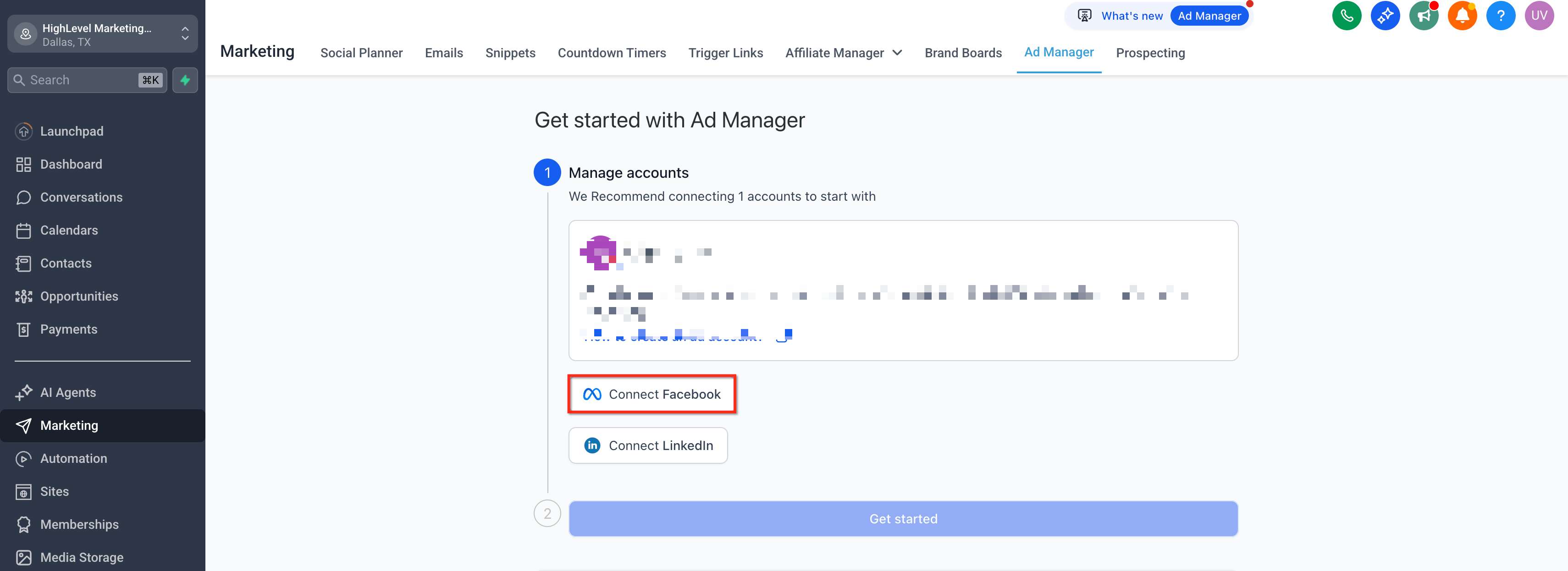
- Connect a Meta Ad Account to enable reporting and audience syncing.
- Edit account label/association as needed.
- Delete removes the connection in HighLevel (does not delete the account at Meta).
Impact Note: Removing the connection stops data sync and can affect reporting/audience updates.Pages
Pages are required for lead forms, audiences, and permissions. Most page-level sync or permission issues trace back to Facebook Business Manager access.
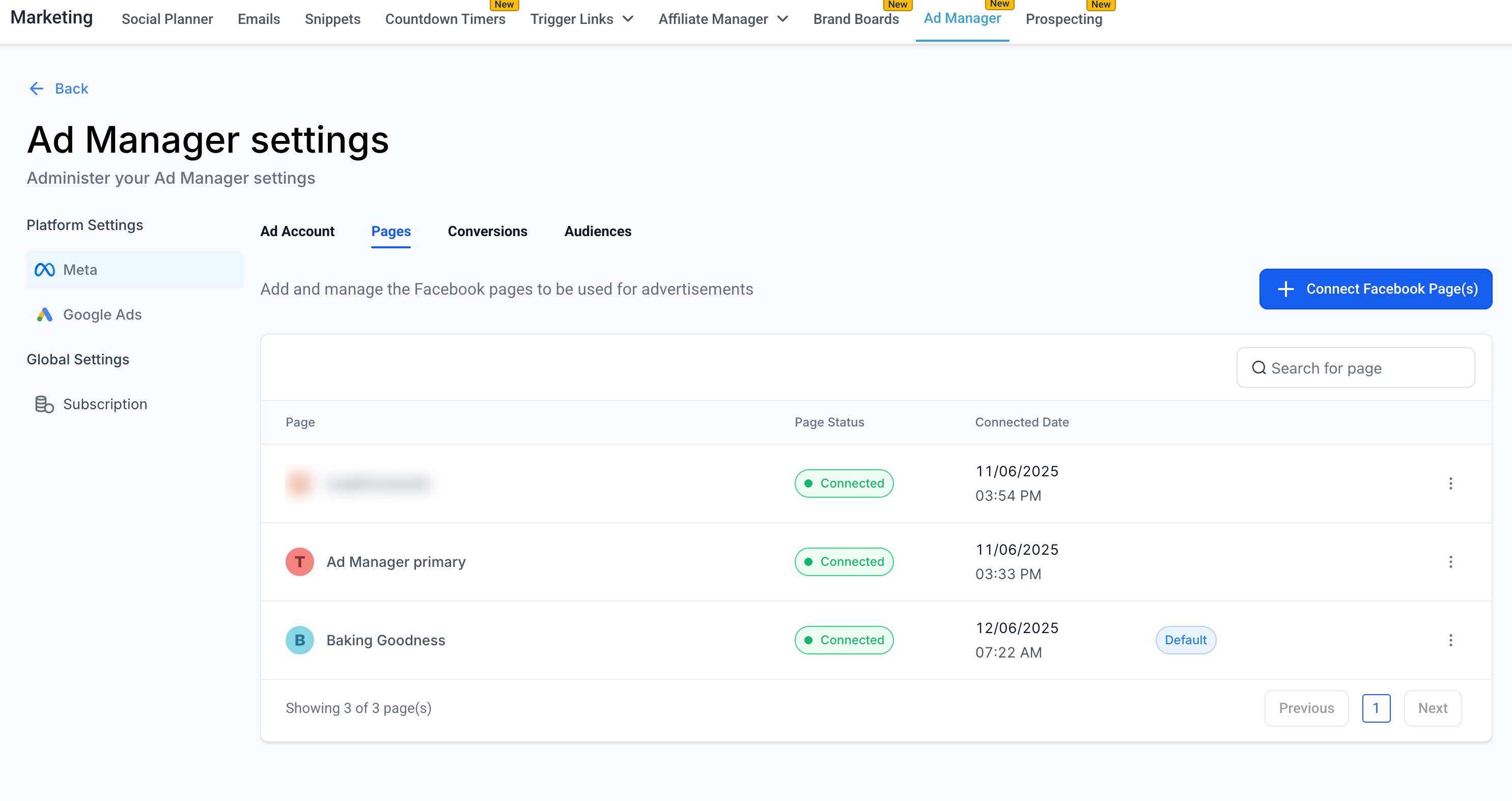
- Connect the relevant Facebook Pages.
- If a Page is missing, confirm Business Manager permissions and that the user connecting has adequate roles.
- Troubleshooting guide: Connecting Facebook Business Account to Ad Manager.
Conversions (Datasets & Pixel)
The Meta Dataset (pixel) captures web actions and, with Conversion API (CAPI), server-side events for more reliable tracking. Proper placement and verification prevent lost conversions.
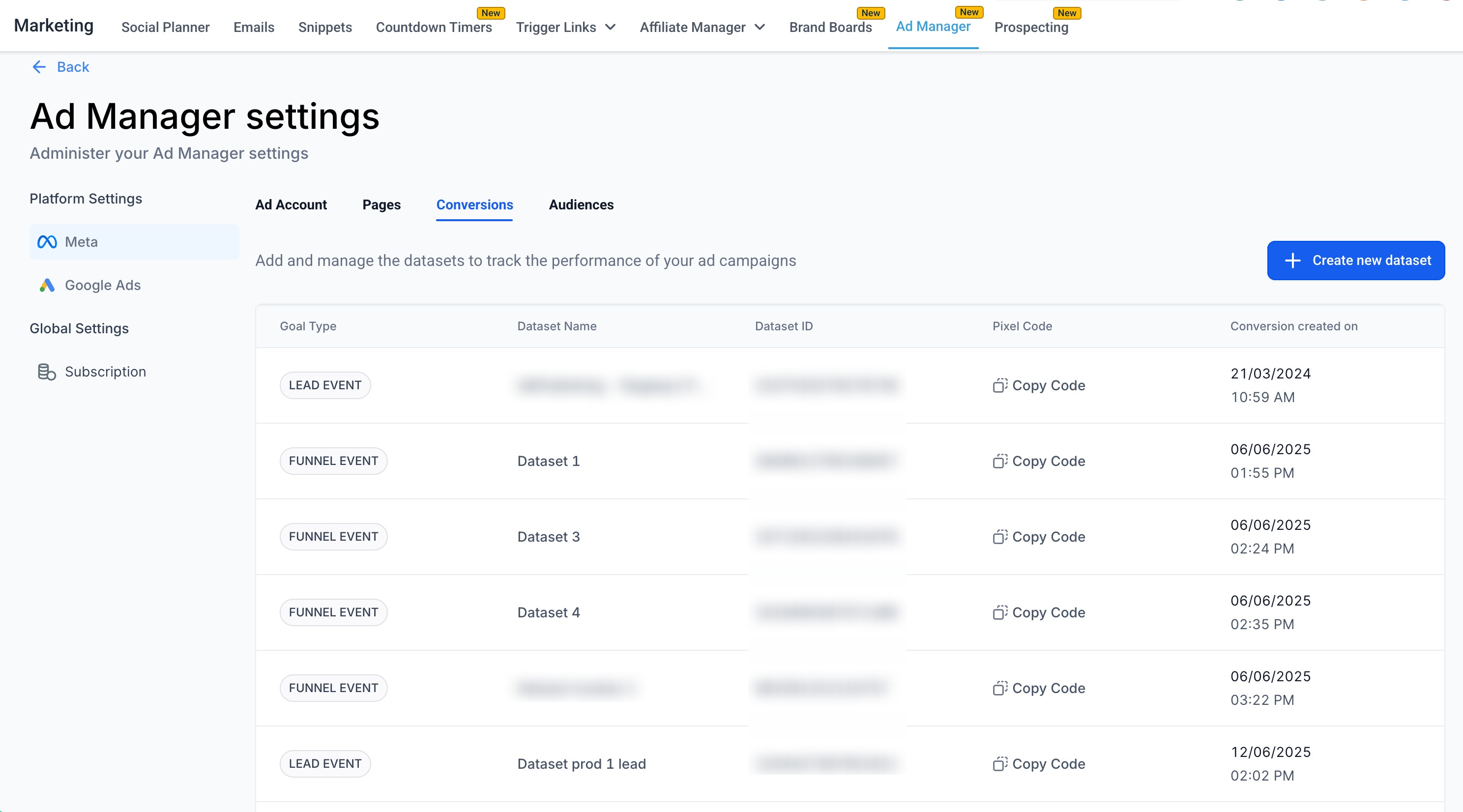
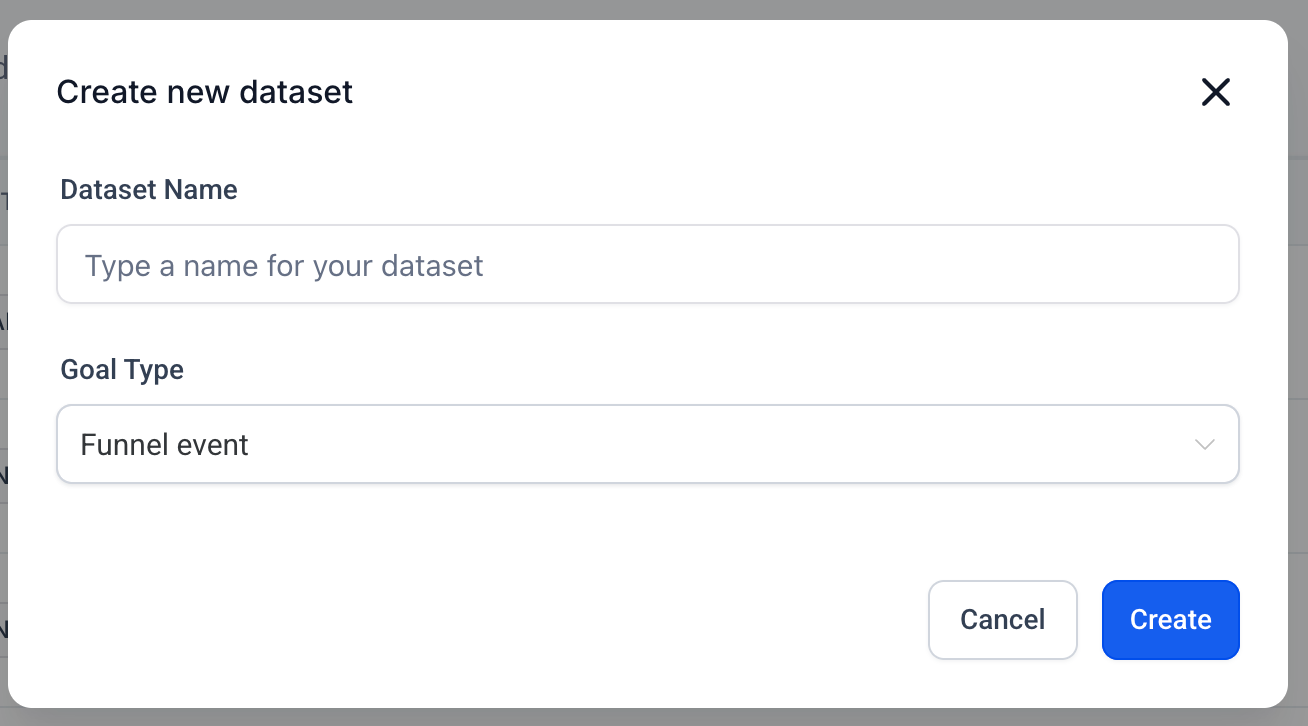
- Dataset & Pixel: Ad Manager provides a Pixel Code to place on funnels/sites.
- CAPI (server events): Send server-side events to improve match rates and resilience.
- Learn how events are sent: How to send a Meta Conversion API action for Ad Manager?
- Pixel placement & verification:How to set up a Funnel Event Pixel for Facebook Conversion API
- Lead flows reference: Facebook Conversion Leads Walkthrough
Step 3: Platform Settings: Google
Ad Manager supports Google Ads offline conversions, which attribute outcomes using identifiers captured in your CRM/workflows. Configure conversion actions here, then send events from workflows.
Google — Conversions (Offline)
Offline conversions credit Google Ads for leads/opportunities that convert after the click. Correct identifiers, time zone, and currency settings are essential for imports to match.
- Scope: HighLevel supports offline conversions for Google (not online pixel events).
- Create/Edit/Delete Google conversion actions within this tab.
- Then send events from workflows using the Google Ads action below.
Recommended Cross-Links:
- Setup & Fields:How to set up Google Ad Conversion Actions
- Event Delivery:Workflow Action — Add to Google AdWords
Common Pitfall (Quick Tips):

Ensure GCLID/GBRAID/WBRAID or other required identifiers are captured and passed.

Match time zone and currency with the Google Ads account.

Expect import latency before Google reflects conversions.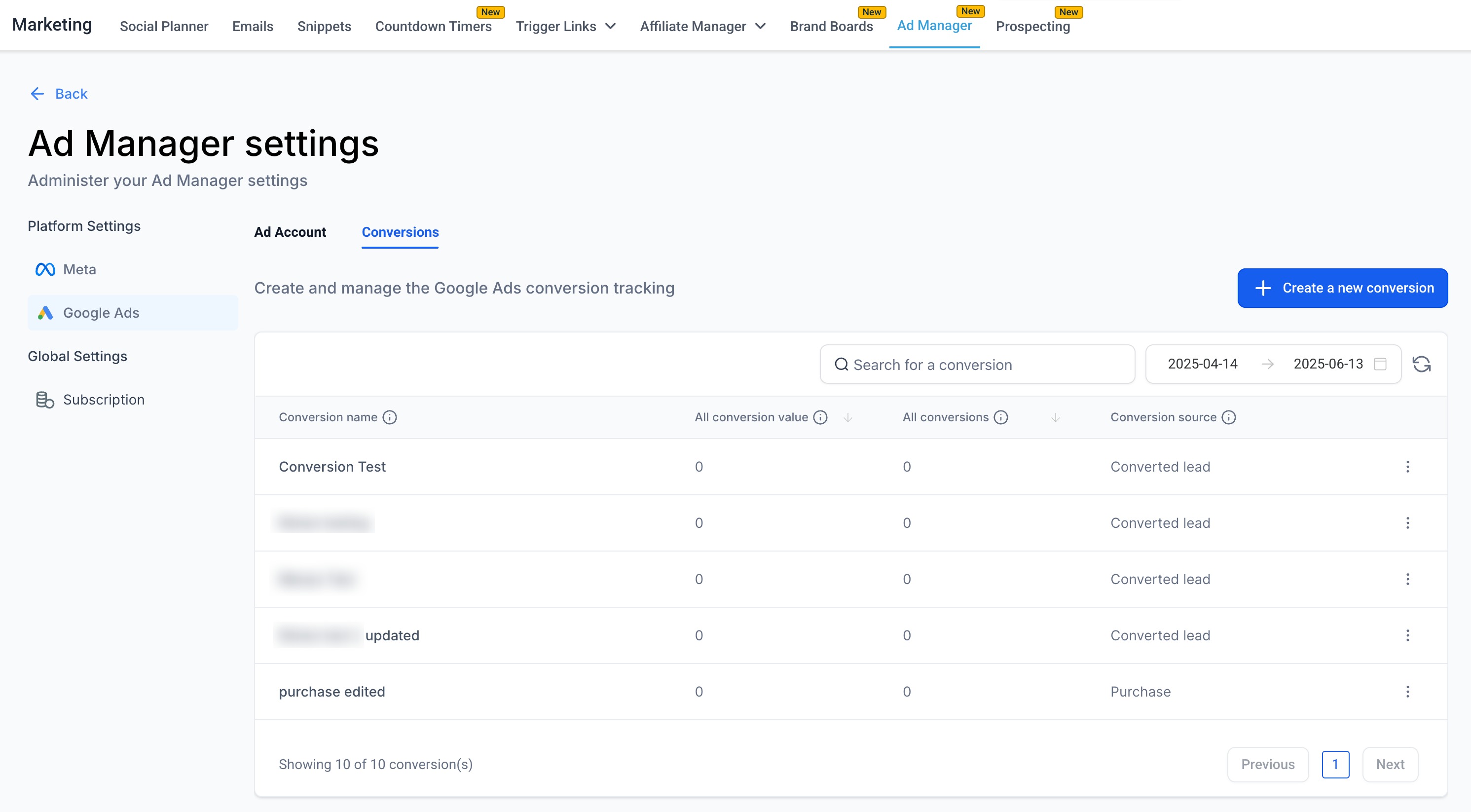
Step 4: Create Audiences & Monitor Data Flow
In Audiences, create Custom or Lookalike audiences; confirm status moves from Populating to Ready. Check Meta event diagnostics and Google conversion imports after activity. Confirm audiences populate and are selectable during campaign creation.
Audiences Tab
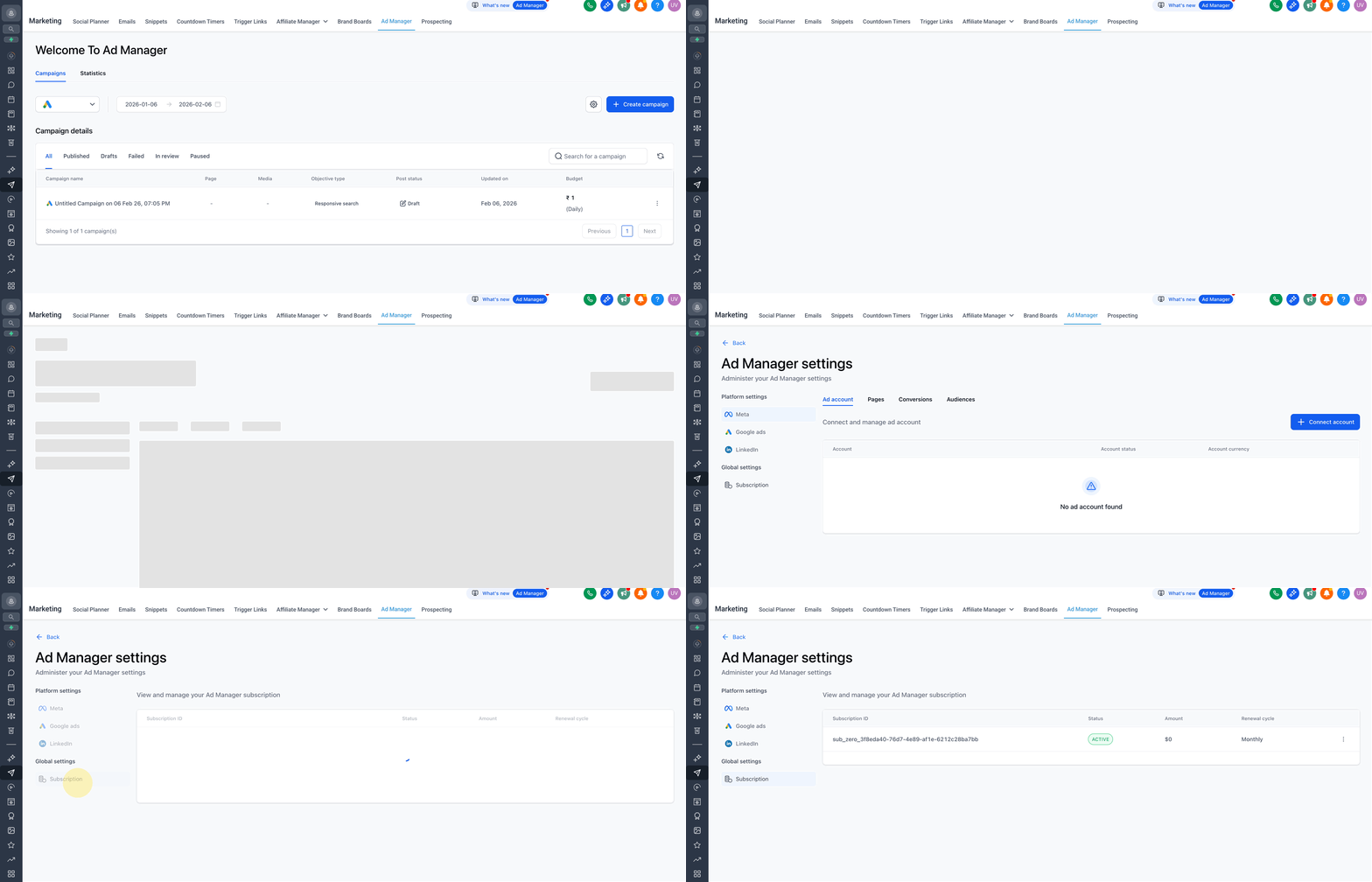
Audiences enable precise targeting and exclusion strategies across Meta and Google. Maintaining clean seed lists improves performance and expands reach with lookalikes.
- Custom Audiences: Built from customer lists, website activity, or CRM segments.
- Lookalike Audiences: Automatically find new people similar to a high-quality source audience.
- Statuses: Newly created audiences may show Populating before becoming Ready.
Subscription settings indicate whether Ad Manager is enabled for the sub-account and where to upgrade. Agencies can centrally enable and resell Ad Manager to clients.
- View current plan/state for Ad Manager.
- Locate upgrade/enable controls (agency permissions required).
- Agency Guide: How to Enable and Resell Ad Manager
Create & Manage Audiences (Recommended Guides):
Create Custom Audiences in Ad Manager
- Create Customer List Custom Audience
- Create Lookalike Audiences in Ad Manager
- Audiences Tab Overview — Ad Manager Settings
Summary of Capabilities:
Meta: Connect Ad Accounts & Pages; manage Dataset/Pixel; support CAPI; link troubleshooting.
Google: Create/manage offline conversion actions; deliver via Workflows.
Audiences: Build Custom & Lookalike audiences; monitor status.
Subscription: Verify plan access; enable at agency level as needed.
Frequently Asked Questions
Q: Does HighLevel support Google online/webtag conversions in Ad Manager?
A: No. HighLevel Ad Manager supports Google Ads offline conversions. Create conversion actions in Google → Conversions, then send events via workflows.
Q: What happens if I delete a Meta Ad Account or Page from Settings?
A: Deleting removes the connection in HighLevel only. Reporting and audience syncing stop until reconnected. It does not delete the asset in Meta.
Q: How do I send offline conversions to Google after creating the action?
A: Add the Workflow Action — Add to Google AdWords to your automation and pass the required identifiers (e.g., GCLID/GBRAID/WBRAID) along with value and time.
Q: Where do I find my Meta Dataset ID and Pixel code?
A: Go to Meta → Conversions. Copy the Pixel Code for placement and note the Dataset ID for diagnostics or CAPI references.
Q: My Facebook Pages don’t appear—what should I check?
A: Confirm the connecting user’s Business Manager role and page permissions. Use the permissions checklist guide linked from the Meta → Pages area.
Q: What’s the difference between Custom and Lookalike audiences?
A: Custom audiences use your existing contacts or activity. Lookalike audiences use your best “seed” audience to find new people with similar traits.
Q: How long until audiences populate or conversions appear?
A: Audience statuses may show Populating before Ready. Google offline conversions can take time to import; allow for normal import latency.
Q: Can agencies enable Ad Manager for client sub-accounts?
A: Yes. Agencies can enable/resell Ad Manager. See How to Enable and Resell Ad Manager for plan details and steps.
Related Articles
Was this article helpful?
That’s Great!
Thank you for your feedback
Sorry! We couldn't be helpful
Thank you for your feedback
Feedback sent
We appreciate your effort and will try to fix the article