Flow-Based Voice AI agents built with the visual Flow Builder can be included in Snapshots, allowing you to copy entire call flows—complete with nodes, branches, and connected actions—across sub-accounts without rebuilding from scratch.
This guide explains what Flow-Based Voice AI Snapshot support includes, how to add these agents to your Snapshots, and best practices for deploying production-ready voice experiences at scale.
Key Benefits of Snapshot Support for Flow-Based Voice AI Agents
Snapshotting Flow-Based Voice AI agents gives agencies a repeatable, scalable way to deploy proven call flows across many accounts while preserving all the underlying logic. This helps you standardize client onboarding and voice experiences without sacrificing customization where it matters.
Requirements and Limitations for Flow-Based Voice AI Snapshots
Understanding what is and isn't moved with a Snapshot helps you plan smooth deployments and avoid surprises after import. Snapshots move configuration, not live telephony resources or historical data.
The source and destination sub-accounts must have Voice AI enabled so that the imported agents can run as expected.
Voice AI agents require a compatible phone number in the destination account before they can take calls, even though the number itself is not copied by the Snapshot.
Any referenced workflows, triggers, or other connected assets should either be included in the same Snapshot or already exist in the destination account, so the flow can wire up correctly.
Assigned phone numbers for Voice AI agents are not copied via Snapshots and must be reassigned in the destination account.
Contacts, call history, call transcripts, and other live activity remain in the source account and do not move with the Snapshot.
You may need to update small details such as local phone numbers, business hours, or location-specific messages after import to fully localize the agent.
If a Snapshot is protected using Assets Protected Snapshots, recipients can use the imported Flow-Based Voice AI but may be restricted from editing or exporting certain assets, depending on your protection settings.
Voice AI Assets in Snapshots
The Voice AI asset category inside Snapshots supports both prompt-based and Flow-Based Builder agents, giving you a single place to manage every voice configuration you want to reuse.
When you create or load a Snapshot, Flow-Based Voice AI agents appear alongside other Voice AI assets. This lets you choose exactly which agents to move into new or existing sub-accounts, whether they're simple prompt-based agents, complex flow-driven agents, or a mix of both.
Under the Voice AI asset category, your Flow-Based agents will be listed as selectable assets.
The same agents appear under Voice AI so you can decide whether to load all or only specific agents into the target account.
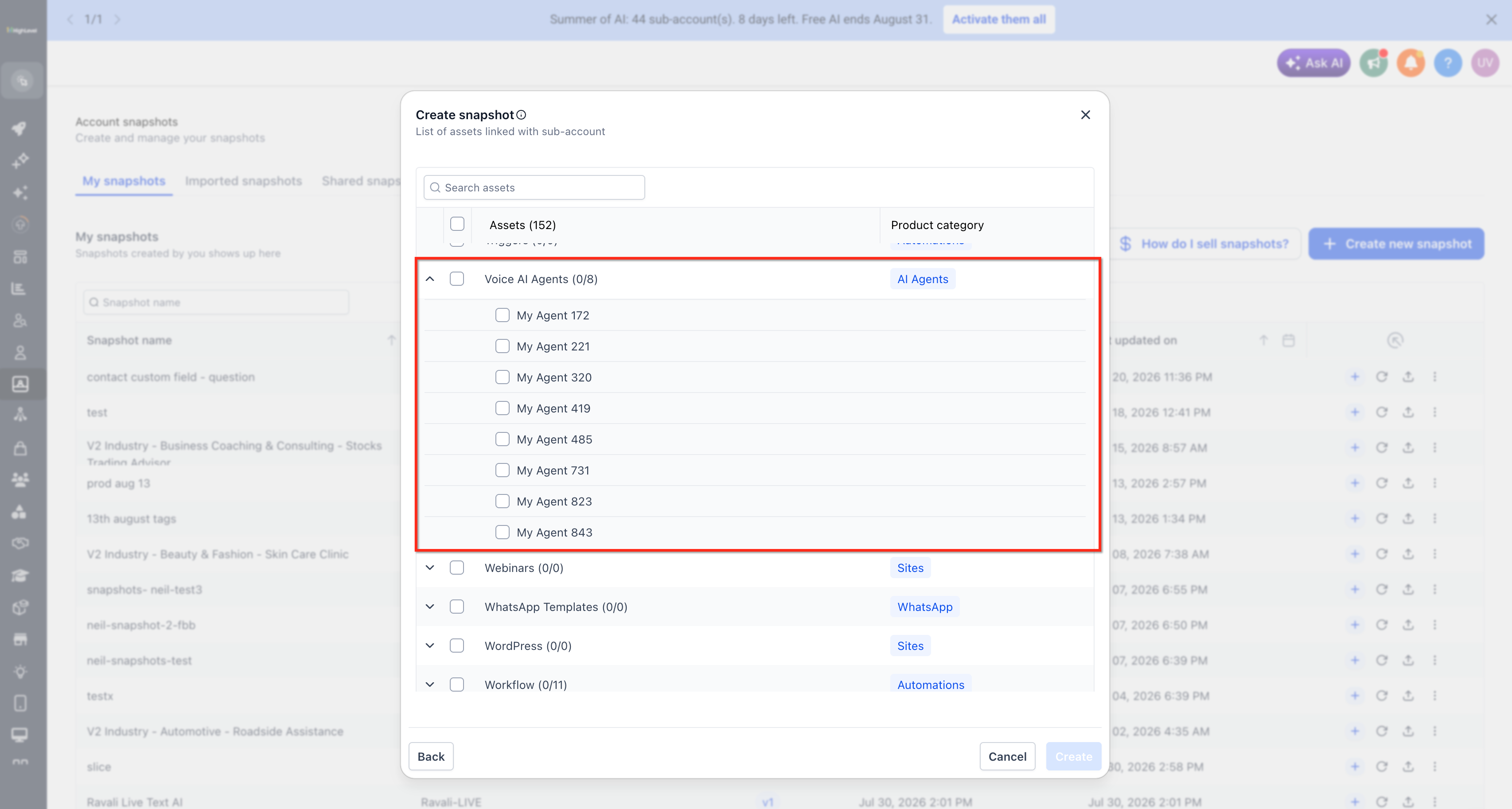
You can:
- Select only Flow-Based Voice AI agents.
- Select only prompt-based Voice AI agents.
- Select both Flow-Based and prompt-based Voice AI agents along with other Snapshot assets (workflows, funnels, etc.) for a full, ready-made template.
How Flow-Based Voice AI Builders Transfer Between Accounts
Flow-Based Voice AI agents are more than just a single prompt—they're entire call journeys represented as graphs with nodes, branches, and action connections. When included in a Snapshot, that complete structure is recreated in the destination account using the appropriate local asset IDs, so the agent is immediately usable once numbers and final details are configured.
- The full flow graph (all nodes and branches)
- Agent configuration (such as name, description, and core settings)
- Connected actions and references to other assets (e.g., workflows, triggers, booking actions) when those assets are also available in the destination account
- Versions of the agent that are part of the current active flow setup
- Internal IDs for referenced assets (workflows, triggers, calendars) are mapped to the destination account's copies where available, ensuring the imported flow uses that account's own resources
- Any flow steps that depend on unavailable assets will need manual adjustment after import (for example, pointing to a different workflow or calendar)
How to Set Up Snapshot Support for Flow-Based Voice AI Agents
Including Flow-Based Voice AI agents in Snapshots follows the same familiar Snapshot workflow you use for other assets. The key difference is simply selecting your Flow-Based agents under the Voice AI category when creating and loading Snapshots.
- Open the sub-account where your Flow-Based Voice AI agent currently lives.
- Go to Voice AI and open the Flow-Based Builder for the agent you want to reuse.
- Confirm that:
- The flow is working as expected (test calls complete successfully).
- Any workflows, triggers, calendars, or other connected assets are configured and active.
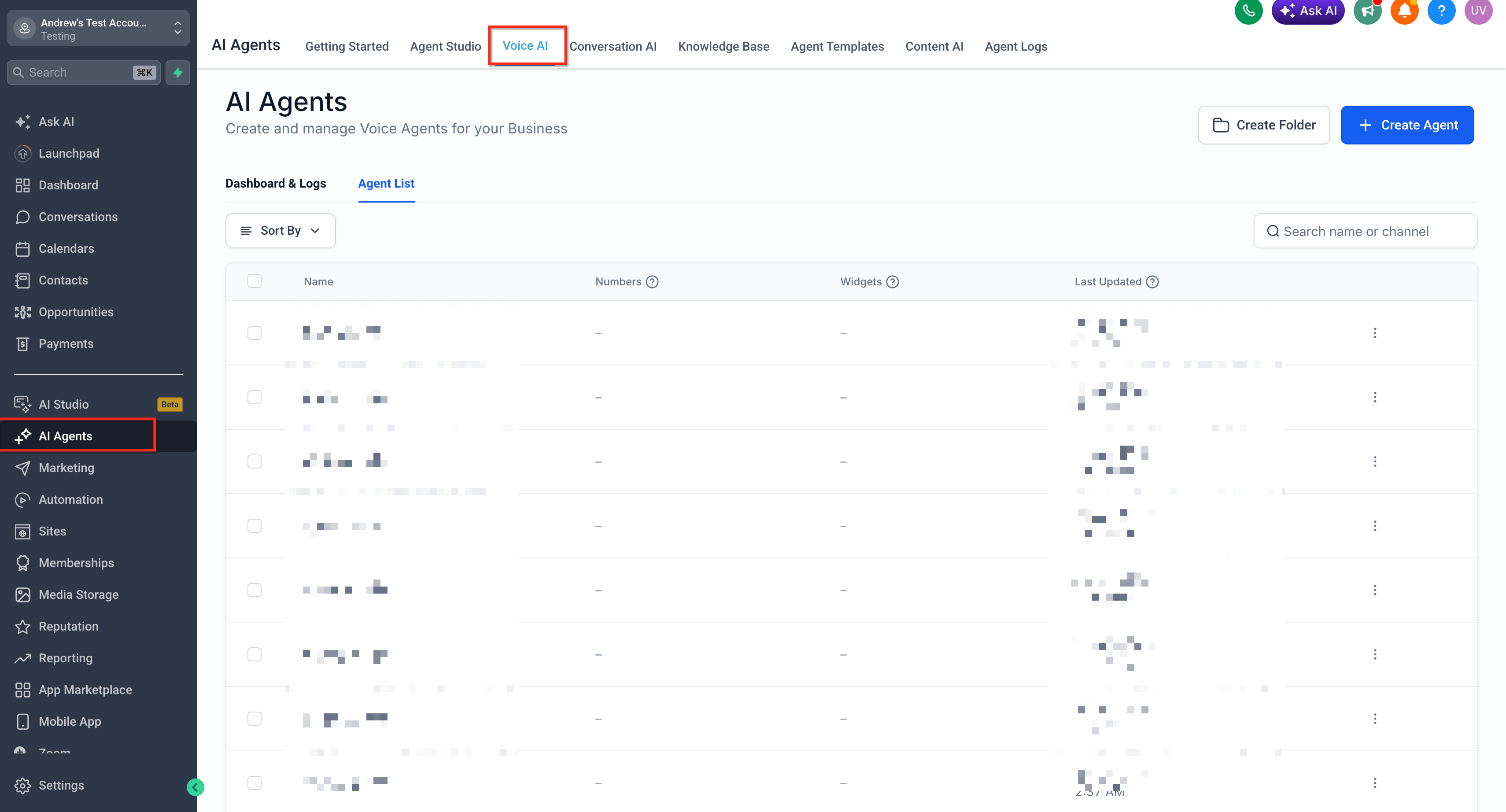
- Switch to Agency View.
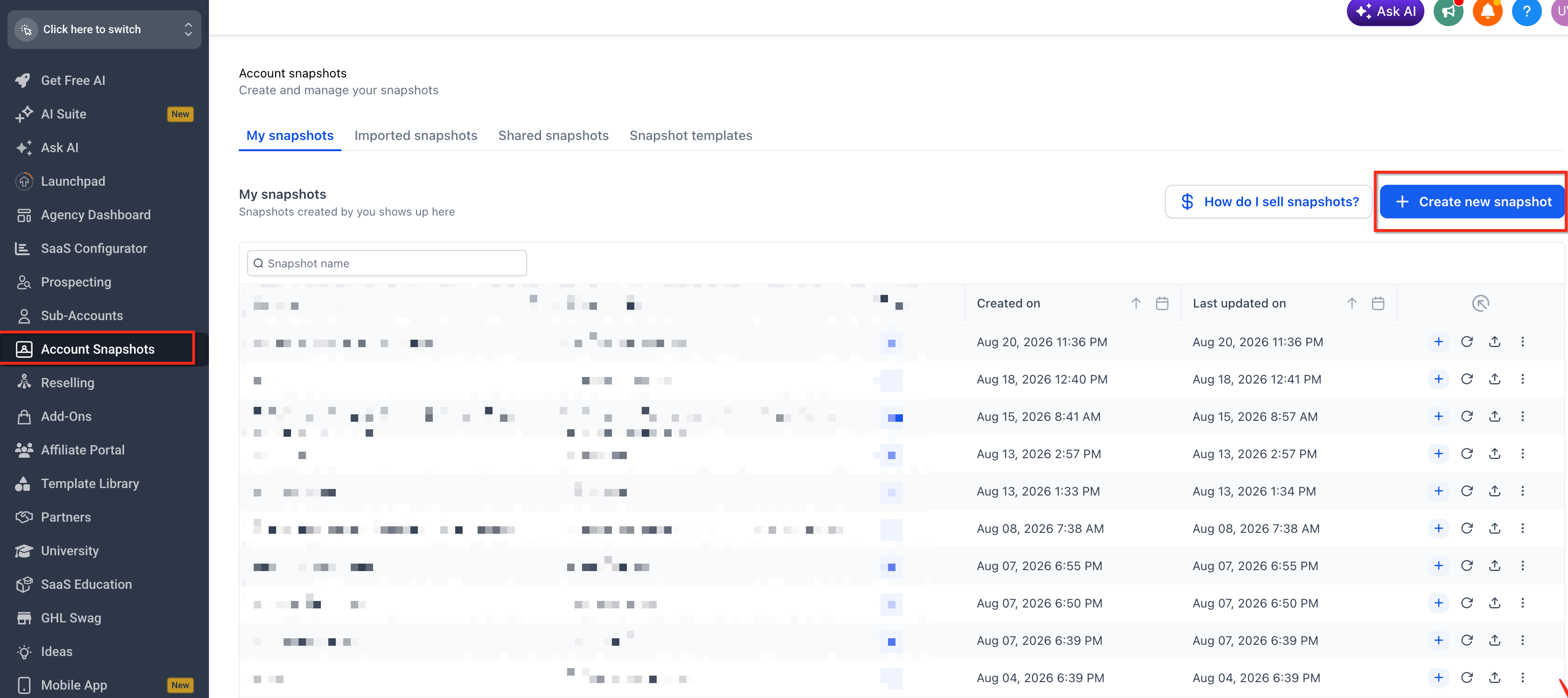
- Click Account Snapshots in the left navigation.
- Click + Create New Snapshot (or the equivalent "Create Snapshot" action).
- Choose the source sub-account that contains your Flow-Based Voice AI agent.
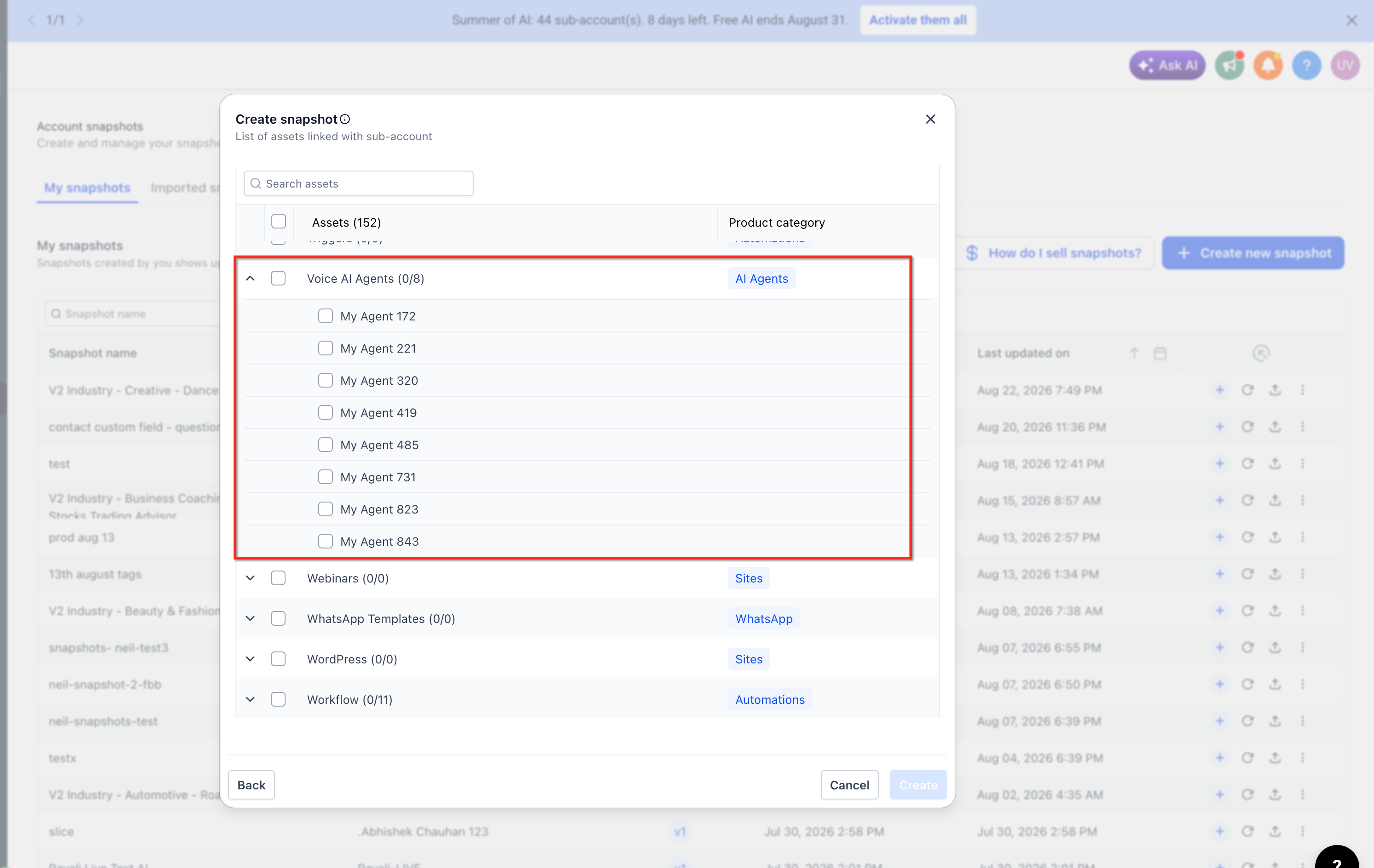
- In the asset selection step, locate the Voice AI category.
- Expand Voice AI to see all available agents:
- Prompt-based agents
- Flow-Based Builder agents
- Check the box next to each Flow-Based agent you want included.
- Optionally, include related assets like workflows, triggers, calendars, funnels, or campaigns that your flow depends on.
- Click Create or Save to finalize the Snapshot. The Snapshot now includes the selected Flow-Based Voice AI agent(s).
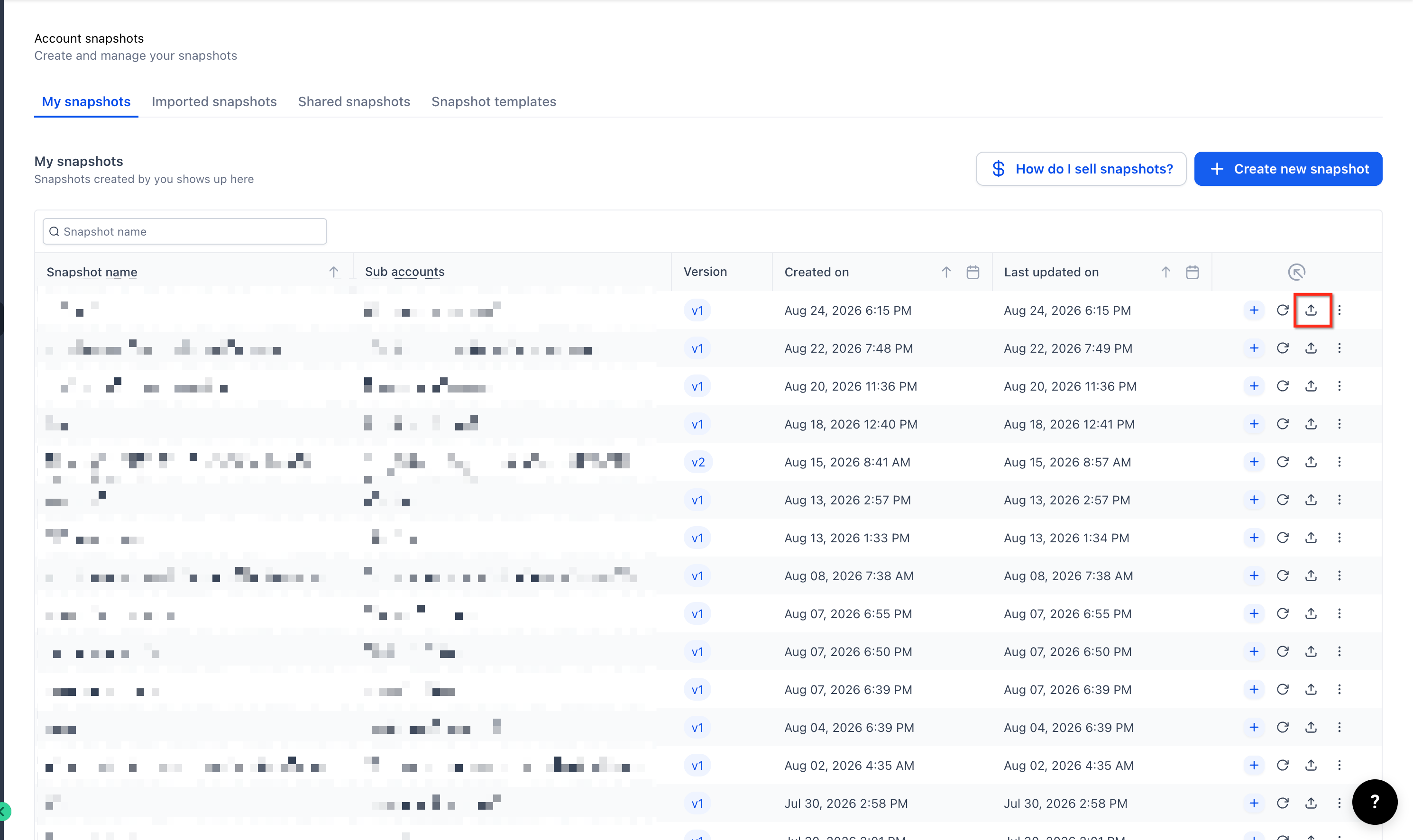
- From Agency View → Account Snapshots, locate the Snapshot you created.
- Click Load (or the equivalent import option).
- Choose the destination sub-account.
- Review the list of assets to be loaded and ensure that Voice AI → [Your Flow-Based Agent] is selected.
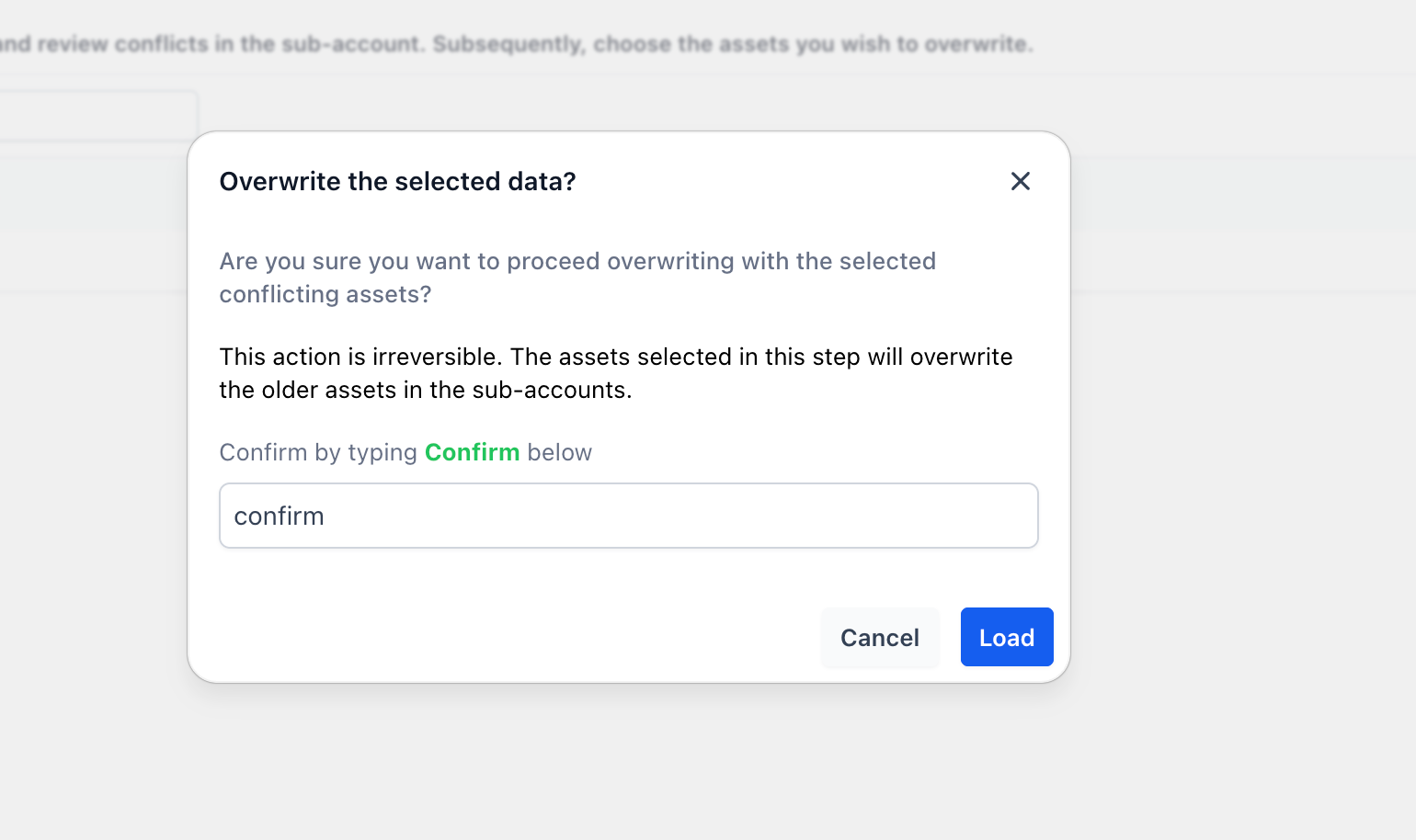
- Confirm and start the load. HighLevel recreates the Flow-Based Voice AI agent in the destination account, wiring it to that account's local asset IDs for any included dependencies.
- Switch to the destination sub-account.
- Open Voice AI and confirm that your Flow-Based agent appears in the list.
- Assign or verify a compatible LC Phone or Twilio number for the agent so it can place and receive calls.
- Update any location-specific details (e.g., hours, addresses, local offers) to reflect the destination account's business.
- Place a few test calls to ensure the agent behaves as expected and that all actions trigger properly.
Your Flow-Based Voice AI agent is now live in the destination account with all flow logic, nodes, branches, and connected actions intact—ready to handle calls immediately after phone number assignment.
Best Practices for Using Flow-Based Voice AI with Snapshots
Adopting a few best practices will help you maintain clean templates, avoid conflicts, and ensure smooth imports when working with Flow-Based Voice AI agents in Snapshots.
Frequently Asked Questions
Was this article helpful?
That’s Great!
Thank you for your feedback
Sorry! We couldn't be helpful
Thank you for your feedback
Feedback sent
We appreciate your effort and will try to fix the article